
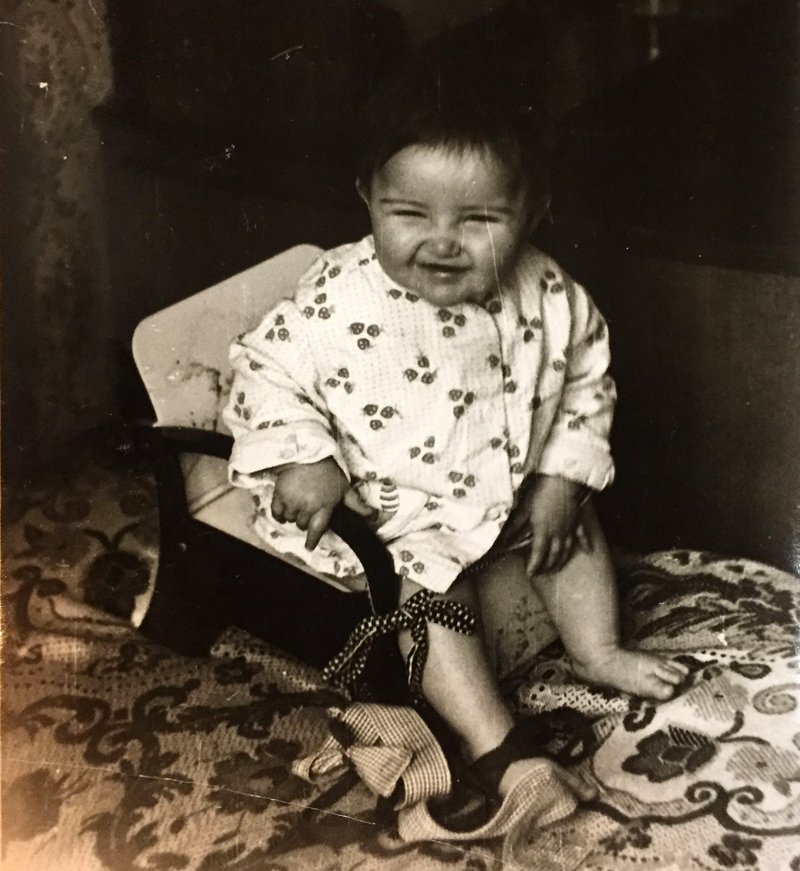
Something I don’t talk often about is my early childhood story.
I was born in Moscow, Russia, and one could say that I was a communist until I was 8, or simply a human born into a communist world. But my story goes deeper than that, as I was born a Russian Jew. My parents are Jewish, their parents were Jewish, and their parents were Jewish, and so on. That lineage runs further back than I can see.
And yet, I was completely unaware of being Jewish until we moved to the U.S. in October of 1991.
When we moved, everything shifted at once. We spent our first year and a half in Louisville, Kentucky, where I attended a Hebrew Day school and was learning English and Hebrew at the same time. My entire worldview dissolved and had to form into a new one.
That’s when I started remembering the stories more consciously.
Stories of propaganda from my grandparents. Stories of my parents not receiving opportunities because they were Jewish. In Russia, being Jewish was marked as a nationality, not a religion, and it was listed that way in passports.
I was young, but I feel it now in my own bones.
I remember my parents telling me we were moving to America and asking me not to tell anyone. I was so excited, I don’t think I kept that secret to myself. Not long after, the adults I was with suddenly gasped when they saw a giant swastika spray-painted across our first-floor balcony in the Soviet-era apartment building where we lived. I knew something was wrong even if I didn’t understand what it was. That was my first experience of antisemitism.
Later, in the small New Jersey town where I grew up, someone drew swastikas onto the steps of the first home my parents ever owned, just as we were moving in.
My grandmother would tell me how, in Russia, her entire family lived in one room in a shared apartment, with multiple families sharing a kitchen and a toilet. They would go once a week to the public baths to shower. Meanwhile, on television, there were images of people living comfortable lives. I grew up on stories after stories like this.
There was the time when Stalin published the article called “Killers in White Coats,” accusing Jewish doctors of crimes, labeling them as criminals. My great-grandmother was a doctor. The same neighbors who once loved my grandmother and her brother began calling them hateful names as they ran down the long hallway of their building to escape. Later, they would go into the metro and cry.
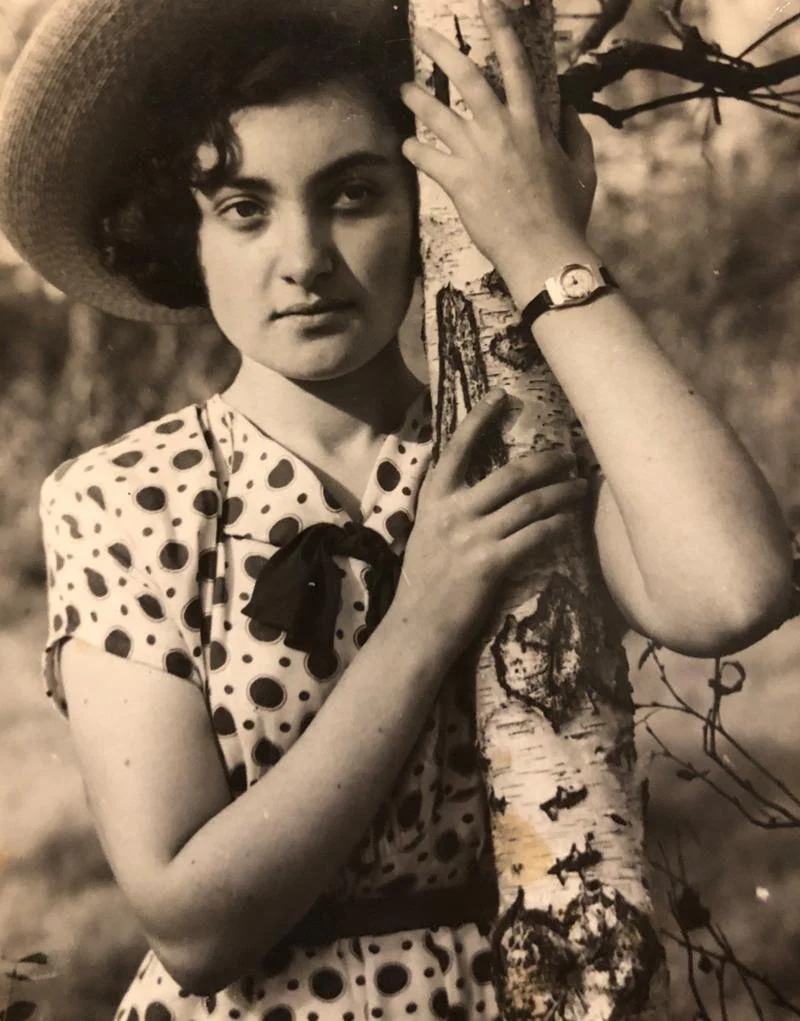
My grandmother, Babushka Ira.
Just a few months ago, I found a letter my grandmother — my mom's mother, Babushka Ira as I called her — wrote describing her evacuation from Moscow during World War II. I want to share part of it:
“My family has been evacuated to the city of Ufa of the Bashkir Republic in 1941, and in 1942 we moved to Andizhan, Uzbekistan. We have lived there till 1943, and it has been extremely difficult life. Our mom has just graduated from a medical school, and she couldn't find a job anywhere. My little brother and I were hungry all the time, and had to go and beg strangers for some bread. Eight of us lived in one room in a shared apartment: my mom, brother, mom's older sister with her three children, our grandmother and I. Grandma has evacuated from Vitebsk, and she could only speak Yiddish, no Russian.
While in evacuation, both of us, my brother and I, got sick with diphtheria. Later on I got very sick with typhus, and was placed into an insulator far from my family, so I wasn’t able to see them at all. Such a long separation from my family was a very hard experience for a little girl. I’ve finally gotten better, but I still have residual medical conditions, such as heart murmur. After my mom finally found a job, our life has gotten a little easier, at least we weren’t hungry anymore.”
My grandmother had a baby sibling who died during that time. Until I saw this letter a few months ago, I had no idea that I had a great-great grandmother who spoke Yiddish from Belarus. It’s so forgotten in my world. When I later looked into it, I learned that 90% of Belarusian Jews were killed. I only know fragments. Ancestors from Ukraine, Latvia, Belarus, Romania. Family who grew up in Azerbaijan. A lineage shaped by movement long before I was born.
These are not distant histories to me. And these memories pass down through our lineage to us through our energetic, emotional, and epigenetic blueprint.
The last few years, I’ve been quietly watching the world, the wars, the narratives people hold, feeling it through my root connections, seeing so many angles at once. I haven’t felt called to speak publicly about it. It’s felt tender. It’s felt scary. I haven’t felt the pull.
When we came to the U.S., I felt safe. That safety felt solid. I never imagined I would feel the return of antisemitism in ways that stir something old in my body, or notice more Jews around me feeling unsettled and afraid.
The Roots Go Deep
When I was in Peru last month, in the jungle, I found myself thinking about my roots. How far back they go. How much they carry. No one else can really feel your roots the way you do.
Can you feel yours? Have you explored them? The migrations, the ruptures, the reinventions? The languages that were lost or preserved? The systems your family had to survive?
I’ve been sitting with these questions and the impact our lineages have on us now. I found myself thinking about Iranians and Venezuelans in diaspora, and others who have watched their systems unravel and had to rebuild their lives elsewhere. That experience is not abstract to me.
What does your body remember?
What has your family lived through?
What strength did you inherit without even knowing?
What ancestry lives within you?
Especially in families shaped by migration, war, exile, or major change, there are stories still living beneath the surface. Other times, they show up through unspoken secrets, untimely deaths, divorces, or broken hearts.
This is why I care so deeply about family constellations and family stories. When we look at our lineage, we are not only uncovering wounds. We are discovering what endured.
I’m not religious. I went to Hebrew school and had a Bat Mitzvah, but it never became a religion I embraced. I appreciate the culture and have celebrated many holidays with my family. And even so, being Jewish is not something I can opt out of. It lives in history, in culture, in genetics, in memory, in my bones. Perhaps one day I will feel called to explore it more deeply.
I remember going to Germany in my early twenties and staying with family and family friends who had also left Russia. The kitchen table of my childhood scattered across continents. Israel, The U.S., Germany, and others. What once felt centralized became dispersed.
We were days away from moving to Israel ourselves. A fire at the U.S. Embassy delayed our paperwork. I am technically a political refugee. My parents began again here, working minimum wage jobs despite their degrees, as they learned English. I wore hand-me-down clothes. We rebuilt from scratch.
Near the end of our time in Russia, I remember Swan Lake playing on television for days while there was a coup at the Kremlin. Tanks in the streets. My mom telling me my dad was outside protecting the White House. I was little, but I remember the feeling in the air. The anxiety. The anticipation. The sense that something foundational was shifting and change was brewing.
My body remembers that.
We've Been Here Before
On February 20th 2026, Saturn and Neptune came together in the sky, ending and beginning a new 36-year cycle.
Saturn is associated with growth, structure, responsibility, authority, and the systems that hold things in place. Neptune is associated with dreams, ideals, illusion, and the dissolving of boundaries. When they come together, structures can begin to dissolve.
The last time they met was in 1989, around the fall of the Berlin Wall and the unraveling of the Soviet Union.
As a child, I watched a system collapse. I remember Swan Lake playing on television while tanks filled the streets. The adults were whispering in the kitchen, their voices low and tight, Radio Freedom playing in the background. I remember the feeling in the air, the anxiety, the sense that something was happening that no one could quite explain to me.
What I am seeing and experiencing now carries a similar atmosphere, as structures are questioned, narratives begin to shift, and power slowly rearranges itself.
And this conjunction is not happening in isolation.
We are living through an unusual astrological period. Over the past year, all of the outer planets have shifted signs within a relatively short span of time. These planets move slowly, and when they change signs, they tend to correspond with generational shifts.
With all of them changing signs, that alone suggests we are in a collective threshold. The world is changing.
Astrology reminds me that cycles move, that structures form and dissolve over time. This has happened before, and it will happen again in new and different ways each time.
It is not always pretty, because collapse rarely is. But I have learned that breakdown and transformation often live side by side, and that something has to end for something new to take shape.